Tag Archives: Israel

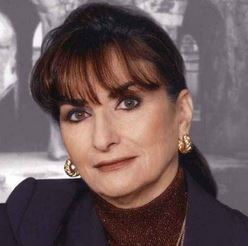
Jew of the Week: Judy Feld Carr

Saving Syria’s Jews

Judy Feld Carr

Judy Feld Carr

Judith Feld Carr (b. 1938) was born in Montreal and grew up in Sudbury. She earned a Master’s in musicology from the University of Toronto, and taught music in both high schools and universities, including Yeshiva University in New York and Hebrew University in Jerusalem. In the early 70s, inspired by a neighbour who was a Holocaust survivor, and by an article in the Jerusalem Post about 12 young Syrian Jews who were badly hurt when attempting to flee the country, Carr undertook a mission, together with her then-husband Dr. Ronald Feld, to help disadvantaged Jews living in Arab lands. Following the establishment of Israel in 1948, the living conditions for over a million Jews living in Arab lands became intolerable. In the following years, around 900,000 Jews were forcibly expelled from their homes across the Arab world. While the global community focuses on the Palestinian refugee crisis, few have ever paid much attention to the plight of these Jews. In Syria, Jews were barred from leaving the country (in fact, they were forbidden from traveling more than three kilometres without a permit!) and were forced to remain under terrible circumstances. Carr made contact with Syrian Jews in Canada who could help her, and then with Rabbi Ibrahim Hamra in Damascus, with whom she worked to smuggle Jews out of Syria, as well as to ransom Jews trapped in Syrian prisons. They communicated in secret by highlighting phrases in Torah texts that would be sent back and forth. Carr soon received death threats for her efforts, but persevered, even after her husband passed away unexpectedly from a heart attack. In 1973, a charity fund was established at Beth Tzedec Synagogue in Toronto to assist Carr in her work. All in all, over three thousand Jews were rescued from Syria – three quarters of the whole community. Carr was awarded the Queen’s Jubilee Medal, the Order of Canada, as well as Israel’s Presidential Award of Distinction, among many others. A book about her story has been adapted to film.

Words of the Week

The three loves – love of God, love of Torah and love of one’s fellow – are all one. One cannot differentiate between them, for they are of a single essence… And since they are of a single essence, each one embodies all three.
Rabbi Menachem Mendel Schneerson, the Lubavitcher Rebbe
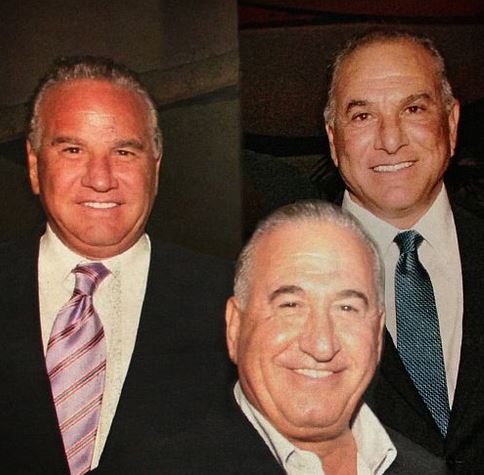
Jews of the Week: Joe, Ralph, and Avi Nakash

The Jordache Brothers

Avi, Joe, and Ralph Nakash

Joseph Nakash (b. 1942) was born in Israel to poor Syrian-Jewish immigrant parents. At 20, having never finished high school, Joseph moved to New York with just $25. He initially worked as a stock boy making $40 a week before taking over as store manager, saving money to bring over his brothers, Raphael and Avraham, from Israel. Soon after they arrived, the trio combined their savings to purchase an appliance store in Brooklyn, which they converted to a retailer selling designer jeans. The store was an instant hit, and in just a few years, they opened three more locations. They soon started producing their own brand of jeans: Jordache (a contraction of their names: Joe, Ralph, his son David, and Avi Nakash). Taking a loan to start a massive ad campaign, the brothers were able to turn Jordache into a household name in jeans. By the mid-80s, their revenues neared half a billion dollars, and the brothers began to expand their business into other areas. They started their own global cargo shipping business, and also acquired 50% of Guess (a deal which ended in 1990 with Jordache keeping the “Gasoline” brand and Guess keeping the “Diesel” brand). By 1995, Jordache began to lose its “high-end” status so the brothers made an agreement with Wal-Mart to sell the jeans as a discount label. This actually turned out to be a blessing, further propelling their sales. At the same time, they began to manufacture jeans for other brands like Tommy Hilfiger, American Eagle, and even Levi’s! Since then, the Nakash brothers have also expanded into airlines, hotels, agriculture, banking, and real estate. Their Israeli olive oil factory produces award-winning oils, and their Tel-Aviv tomato plant supplies Heinz with tomato paste. Most recently, they purchased Miami’s Versace Mansion (outbidding Donald Trump), and the Setai Miami Beach Hotel, among the city’s most expensive and prestigious. Their shipping company also won exclusive rights to operate Israel’s Red Sea port in Eilat. Despite the fact that the Nakash empire is worth over $2 billion, many of the company’s decisions are still hammered out at the family’s Shabbat dinner table.

Words of the Week

One who does not see God everywhere does not see Him anywhere.
– Rabbi Menachem Mendel of Kotzk, The Kotzker Rebbe

Jews of the Week: The Sons of Matityahu

The Warrior-Priests of Chanukah

A 16th-Century Drawing of Yehuda Maccabee, by Rouille

A 16th-Century Drawing of Yehuda Maccabee, by Rouille

In 166 BCE, after the passing of Matityahu – the Jewish priest (kohen) who instigated the revolt against the Seleucid Greeks – his third son Yehuda (Judah) was chosen as the new leader of the resistance. By this time, Yehuda had made a name for himself as a fearless warrior and skilled military strategist. Nicknamed HaMakabi, “the hammer” (or alternatively, Makab-Yahu, “the one designated by God”), he continued to win battle after battle primarily through guerrilla tactics and surprise attacks. In 164 BCE, Yehuda recaptured Jerusalem and the Temple, re-purifying it, restoring its holy Jewish rituals, and relighting its menorah. Contrary to popular belief, the war did not end at that point. Two years later, Matityahu’s fourth son Eleazar died at the Battle of Beit Zechariah. Identifying what he thought was the war elephant carrying the Greek king, Eleazar slid under it and thrust his spear into its flesh. The dead elephant collapsed unto Eleazar, killing him as well. Perhaps the most pious of the sons, Eleazar was known to publicly read from the Torah before battle. To gain support, in 161 BCE Yehuda signed an alliance with the Roman Empire, though it helped little. A year later, Yehuda died at the Battle of Elasa. His oldest brother Yochanan (John), of whom the least is known, died shortly after in the ensuing troubles. The youngest son Yonatan (Jonathan) was elected the new leader, by now earning a reputation almost equal to that of Yehuda. He continued the victories against the Greeks, and soon after signed a peace treaty with them. The Greeks left the Holy Land, and Yonatan focused his efforts on rebuilding the state, and removing Greek influences and idolatry from the land. In 153 BCE, a civil war erupted among the Greeks, and Yonatan sided with the winning party. He was given the special Greek title of “strategos”, and appointed as the High Priest (kohen gadol). Yonatan was able to further expand the territories of the semi-autonomous Jewish state. Years later, a different Greek king rose to power, and tricked Yonatan into a fatal trap, imprisoning, and then killing him. The last remaining son of Matityahu was Shimon (Simon), who gathered his forces in response to Yonatan’s death, and helped another Greek king come to power. This king then granted Judea its independence, and Shimon established the Hashmonean dynasty which would rule the Holy Land for the next century. Shimon was its first king and High Priest, reigning for five years of peace and prosperity. Tragically, he was assassinated in 135 BCE. His third son John Hyrcanus took power, continuing the Hashmonean dynasty until its ultimate end at the hands of the Romans.

Words of the Week

A person should always be pliant as a reed, and let him never be unyielding as the cedar.
– Talmud, Taanit 20b

Happy Chanukah!