The Holocaust Survivor Who Saved a Classroom
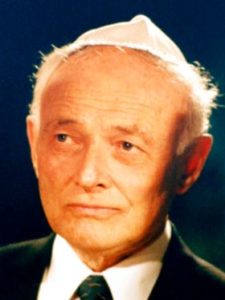 Liviu Librescu (1930-2007) was born in Ploiesti, Romania. In November of 1940, the Romanian government allied with Nazi Germany, and Librescu’s family was deported to a labour camp. Eventually, they ended up in the Focsani Ghetto from which Librescu was liberated in 1945. He stayed in Romania and enrolled in aerospace engineering studies (inspired by his time watching birds fly in and out of the ghetto). A year after graduating he joined the Bucharest Institute of Applied Mechanics where he served as a researcher for 22 years. In 1969, Librescu earned his Ph.D in fluid dynamics, and wrote some very important papers that were unfortunately unknown in the West. He was also recruited by the government to work on top secret military projects. However, Librescu was soon fired for refusing to swear allegiance to the Romanian Communist Party and for requesting to emigrate to Israel. Thankfully, one of his groundbreaking research papers was smuggled out of Romania and brought him international attention. It reached the desk of Israeli Prime Minister Menachem Begin, who personally put pressure on the Romanian government to free Librescu. In 1978, the Romanians relented and Librescu made aliyah to the Holy Land. For the next seven years, Librescu taught at Tel-Aviv University and the world-famous Technion in Haifa. In 1985, he took a sabbatical year and visited Virginia Tech in the US. He decided to stay and joined their Department of Engineering Science and Mechanics. Librescu went on to become one of Virginia Tech’s most famous and beloved professors. He is credited with publishing more papers (250) than any other Virginia Tech professor, and among his many awards are a Dean’s Award for Excellence in Research and a Frank J. Maher Award for Excellence in Engineering Education. He was also on the editorial boards of seven scientific journals, and a guest editor of five more. On April 16, 2007, Librescu was teaching his regular class when a gunman walked into the engineering building at Virginia Tech and opened fire. When the gunman tried to enter Librescu’s classroom, the professor blocked the door and told his students to escape through the windows. He was fatally shot five times. All but one of his students were able to escape. The remaining 22 were saved by Librescu’s heroic actions. In a horrible twist of irony, the Virginia Tech shooting took place on the 27th of Nisan – Holocaust Memorial Day. President Băsescu of Romania posthumously awarded Librescu the Grand Cross of the Order of the Star of Romania (the country’s highest civilian honour), and renamed the street in front of the US Embassy in Bucharest after him. Virginia Tech’s Jewish Student Center is now named after him, too, as is a professorship at Columbia Law School. He was called the “Most Inspiring Person of 2007”. President George W. Bush eulogized Librescu with the following words: “With the gunman set to enter his class, this brave professor blocked the door with his body while his students fled to safety. On the Day of Remembrance, this Holocaust survivor gave his own life so that others may live.”
Words of the Week
Few are guilty; all are responsible.
– Rabbi Abraham Joshua Heschel
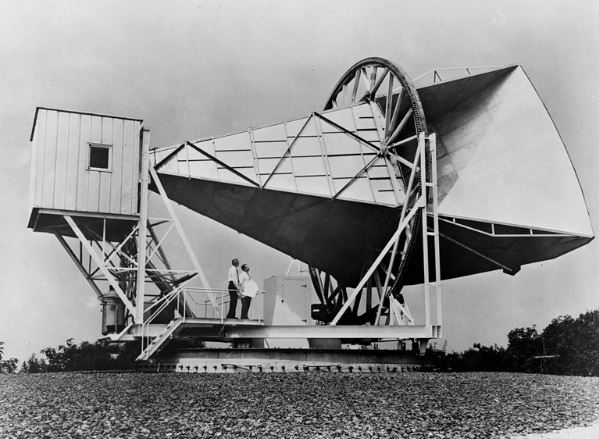
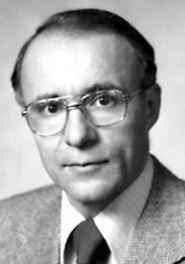 Arno Allan Penzias (b. 1933) was born in Munich. As a six year old, he was evacuated from Nazi Germany through the British Kindertransport rescue operation which saved 10,000 Jewish children. He was later reunited with his parents, who brought the family to New York. Penzias grew up in Brooklyn and went on to study physics. He graduated among the top of his class, then served two years in the US Army as a radar officer. From there, he got a research position at Columbia University’s Radiation Lab, where he helped to develop the maser (a “microwave laser”). After earning a Ph.D in physics from Columbia, Penzias got a job at Bell Labs to do astronomy research with microwave receivers. He was soon joined by Robert Wilson. The two noticed their antenna picking up an inexplicable signal. After ruling out all forms of interference, and carefully cleaning the antenna, the weak signal persisted. The two collaborated with another physicist, Robert Dicke, to show that this signal was the cosmic microwave background (CMB) radiation, the remnants of the universe’s birth, as predicted by the Big Bang Theory. The existence of CMB confirmed that the universe had a beginning, with a burst of radiation, and simultaneously confirmed ancient Jewish teachings about the universe’s origins. The Zohar, a famous mystical commentary on the Torah that was first published some 700 years ago, explains that the universe began with a nikuda hada d’zohar, a singular point of radiance, from which all things were formed. The Zohar explains that this ever-expanding radiance continues to fill the universe, based on the words in the Biblical Book of Daniel (12:3) which describes the “radiance of the firmament”. In fact, this is how the book got its name, Zohar meaning “radiance”. Penzias’ and Wilson’s monumental discovery brought about a beautiful harmony between Torah and science, at once confirming both the modern Big Bang Theory and the holy words of the ancient Jewish Sages. The two physicists won the 1978 Nobel Prize in Physics. Penzias continued his work at Bell Labs for a total of 37 years, rising to the position of Vice President of Research. He was made a Fellow of the American Academy of Arts and Sciences, and the National Academy of Sciences. Penzias later moved to Silicon Valley to advise venture capitalists and tech start-ups. Despite being in his 80s, he is still a venture partner at New Enterprise Associates, and says he has “no plants to retire”.