The Renowned Chemist Who Survived the Holocaust—and Entebbe
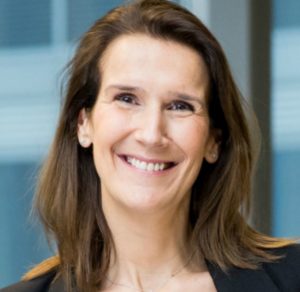
 Renata Sobel (b. 1930) was born in Chelm, Poland. Orphaned at a young age, she was raised by her grandparents. When the Nazis occupied Poland, the family managed to escape and spent the war years in the harsh conditions of Siberia. Young Renata was unable to receive a formal education. After the war, she was engaged to Eliezer Reisfeld—on the condition that he allow her to pursue an education. As a child, Renata was inspired by a biography of Marie Curie and wished to become a scientist, too. The young family made aliyah to Israel in 1950 and settled in Jerusalem. There, Renata Reisfeld took up studies at the Hebrew University. Despite having no knowledge of Hebrew or English, she was the first to complete the entrance exam into the prestigious chemistry program that had only 23 spots. Reisfeld earned her Ph.D, then went to Oregon State University for post-doctoral work. One of Reisfeld’s main areas of research has been photovoltaic cells, and she played a big role in helping to bring down the cost of solar panels to make renewable solar energy possible on a large scale. She is also an expert on nanotechnology and solid state lasers. By 1975, Reisfeld had become the head of the chemistry department at Hebrew University. The following year, she was invited to speak at a conference in Paris. Her flight from Tel-Aviv made a stop in Athens, where Palestinian and German hijackers took control of the plane and diverted it to Entebbe, Uganda. Because she was one of the few hostages that spoke English, she represented the group of 102 passengers, and spoke with Idi Amin. The dictator took a liking to her, and when she asked him to take the hostages out on a tour of Uganda, Amin agreed! Eventually, the hostages were rescued in a daring raid by Israeli commandoes (which took the life of Yoni Netanyahu, brother of Benjamin Netanyahu). All in all, Reisfeld has published a whopping 532 scientific papers, together with four books, and her work has been cited over 30,000 times, making her among the world’s most prolific and renowned chemists. She has been awarded multiple honorary doctorates and scientific medals from around the world. Although officially retired, and now in her 90s, Reisfeld is still coming up with new inventions, the most recent being her fluorescent-transparent glass.
Words of the Week
Sometimes things happen about which the leaders of the generation remain silent. This does not mean that nothing is to be done… On the contrary: when aware that you are able to do something about it, you are obligated to do so.