The Crown Rabbi Who Built Spain
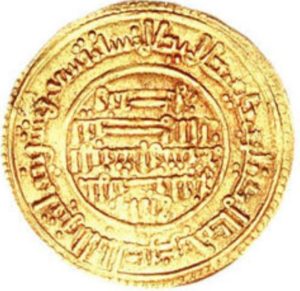
A Castilian maravedi gold coin issued in 1191
Abraham Seneor (1412-1493) was born in Segovia, Castile, into a wealthy Sephardic Jewish family who served as treasurers and accountants for Spanish monarchs. Seneor himself served the Castilian crown. In 1469, he was the key negotiator that arranged the marriage of Isabella of Castile to Ferdinand of Aragon, resulting in the eventual birth of the new Kingdom of Spain. Seneor became Isabella’s main advisor and confidante. In 1480, Isabella decreed that Seneor would receive a lifetime pension of a whopping 100,000 maravedi coins per year for his invaluable services. He was also appointed the Jewish chief justice and “crown rabbi”. In this role, he worked together with his close friend and fellow rabbi-treasurer, Don Isaac Abarbanel. Between the two of them, they were able to raise the sums needed for the Spanish to defeat the Moors in the War of Grenada. They were also the ones that got crown support and funding for Christopher Columbus’ first trip to America. Seneor often intervened on behalf of the Jews, and saved countless Jewish lives by ransoming those that had been captured by pirates. In 1492, the Spanish decreed the Edict of Expulsion to exile all Jews who did not convert to Christianity. Seneor was 80 years old, and knew he wouldn’t survive exile and expulsion. While the younger Abarbanel refused to stay in Spain (although he was given an exemption), the older Seneor decided to convert, at least publicly, in order to keep his influential role and try to ease the plight of the Jews as much as possible. He helped secure temporary refugee for the Jews in Portugal, then did whatever he could to make sure the Jewish exiles did not lose all of their wealth. Still, he was unable to survive the stress of the ordeal and passed away just months after the Expulsion. Seneor had taken on the new name Fernando Coronel, starting a new lineage of Spanish nobility. The Coronel children continued to play important roles in Spanish affairs for decades to come. Many of them were arrested by the Inquisition for continuing to practice Judaism in secret; some were executed and others deported. A great number ultimately returned to Judaism in Holland and the Americas.
Words of the Week
Israel was extraordinary in being the one socially revolutionary people in the Near East to produce a literature and to survive as a distinctive cultural and religious entity.
– Norman Gottwald, renowned professor of Biblical studies and political activist
 Shlomo Gerzovsky (1913-1997) was born in Uman, Ukraine. When the Communist Revolution began, the family fled to Romania, and eventually made its way to the Holy Land. Gerzovsky, now with the Hebraized last name “Gur”, started studying at the Mikveh Israel Agricultural School. In 1936, the Arab Revolt began, with Arab mobs attacking both British nationals and Jewish residents. In response, Gur was among the co-developers of the Homa u’Migdal (“Wall and Tower”) system, a method of building settlements with pre-fabricated protective walls and a watchtower—quickly assembled, sometimes overnight. Gur co-founded the first such settlement, Kibbutz Tel Amal, then helped to establish a whopping 56 others. All settlements were built legally according to existing Ottoman law, on land purchased by the JNF. They served as safe havens for Jews during the violent Arab pogroms, and ensured that Jewish life in the Holy Land would continue to flourish. In 1945, Gur travelled to the US to further his scientific studies. He returned in 1947 to fight alongside the Haganah, and was placed in charge of overseeing weaponry. Soon after, he established and directed Israel’s new Science Corps (heil hamadah), the focus of which was developing new weapons to protect the State of Israel. Together with
 Meir Har-Zion (1934-2014) was born in the new town of Herzliya in 1934. His mother’s side hailed from Sephardic-Turkish heritage, while his father’s side came from Romania and Russia. He spent his early years on a number of different kibbutzim and moshavim. He loved hiking and exploring the Holy Land, together with his younger sister, and the two youths were once arrested by Syrian authorities when they wandered a little too far. It happened again in 1951, and it took negotiations mediated by the UN to secure their release. Two years later, Har-Zion was a co-founder of Unit 101, Israel’s first special forces commando team. While sometimes brutal, the operations of Unit 101 were essential in securing Israel’s borders and maintaining its defenses in the early years. They also made it clear that the new IDF is a force to be reckoned with, and that Israel would respond forcefully if provoked. In 1954, Har-Zion joined the 890th Paratroopers, led by