Category Archives: Writers & Thinkers

Jews in the Wonderful World of Literature, Thought, and Scholarship

Jew of the Week: Rabbi Abraham ben David

The Ravad

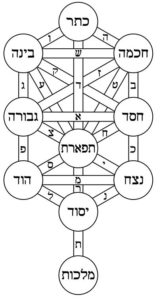
Tree of Life, depicting the Kabbalistic Sefirot

Avraham ben David (1125-1198) also known as the “RaAVaD” (a title derived from the initials of his name, as is common with many Jewish sages) was one of the greatest scholars in history. Born in Provence, France to a Sephardic family, the Raavad was the chief rabbi of Montpellier and Nimes (where Denim fabric, “De Nimes” was invented). During his tenure as the head of the yeshiva, Nimes gained a reputation as one of the greatest places of Jewish learning in the world. Rabbi Avraham spent most of his life in Posquieres. He was incredibly wealthy, financing the construction of schools with his own funds, and supporting the poor. Because of this, he was once imprisoned by the lord of Posquieres, before a count who knew of the Raavad’s greatness freed him and banished the lord. The Raavad wrote hundreds of different works, including a penetrating commentary on the entire Talmud. More importantly, he is often regarded as the “father of Kabbalah”, revealing ancient Jewish mystical teachings and clearly elucidating them. The famous diagram of the mystical Sefirot arranged in a “Tree of Life” is attributed to him. The Raavad was also a noted astronomer, philologist, and philosopher. Spanish government records reveal that his descendants were important advisers to the Spanish monarchy. Meticulous in his analysis, highly critical, and opposed to dogma, he was a man that cared only for Truth. His impact on the depository of Jewish wisdom, and on the Jewish people, is unparalleled.

Words of the Week

Because each life form, even fruit, is entrusted to a specific angel. By saying a blessing over a fruit, we empower that angel to reproduce more of that fruit. One who refrains from partaking of a fruit deprives the world of the spiritual influence that the blessing would have provided.
– Chemdat Yamim
Jew of the Week: Aryeh Kaplan

Rabbi from the Bronx

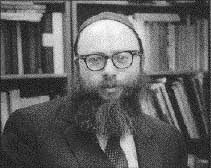
Rabbi Aryeh Kaplan

Rabbi Aryeh Kaplan (1934-1983) Born in the Bronx to a Sephardic-Greek family, Rabbi Kaplan produced over 60 books in his short life and wrote 47 original works in a writing career that lasted only 12 years! He translated the entire Torah, as well as the 45-volume Me’am Loez. Remarkably, he also held a Master’s degree in Physics and once said, “I use my physics background to analyze and systematize data, very much as a physicist would deal with physical reality.” He is credited with playing a dramatic role in the modern Baal-Teshuva movement. It is said that “his mind contained libraries of books waiting to be put into writing. It was the will of God that only so much be revealed and no more.” Tomorrow is his yahrzeit.

Words of the Week

Success is the ability to go from failure to failure without losing your enthusiasm.

– Sir Winston Churchill

Jew of the Week: Joseph Pulitzer

The Nobel of Literature

Joseph Pulitzer (1847-1911) Son of a very wealthy Hungarian-Jewish family, he immigrated to New York in 1864, immediately enlisting in the Lincoln Cavalry and fighting in the American Civil War for 8 months. Being dirt-poor after the war, living on the streets, he gave up all the money he had ($5) for a promise of a job at a plantation, but it turned out to be a scam. He wrote an article about this scam and gave it to a newspaper printer. It was written so amazingly that he was nicknamed “Shakespeare” (he was also later nicknamed “Joey the Jew”). He became the first ever investigative journalist. At age 22, he joined the Republican Party, quickly gained prominence, and won a seat in the state legislature – despite being legally too young! Long story short: he became super rich (and powerful), bought a bunch of newspaper companies and forever changed both politics and the media. He left much of his wealth to the renowned Pulitzer Prize – the “Nobel of literature”.


Words of the Week

Every Jew, no matter how insignificant, is engaged in some decisive and immediate pursuit of a goal… It is the most perpetual people of the earth…

– Johann Wolfgang von Goethe, German dramatist, novelist and poet (1749 – 1832)