Category Archives: Business & Finance

Jews in the World of Business and Finance

Jew of the Week: Meir Dizengoff

Founder of Tel-Aviv

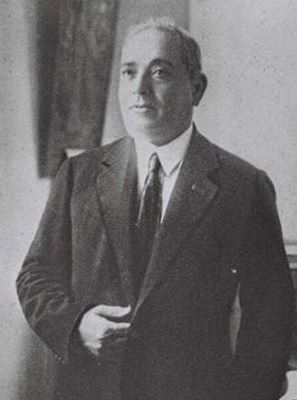
Meir Dizengoff

Meir Dizengoff

Meir Yankelevich Dizengoff (1861-1936) was born in Bessarabia, a region overlapping parts of modern-day Moldova and Ukraine. After completing his education, he enlisted in the Russian Army, where he served for two years. Dizengoff then settled in Odessa and soon joined a revolutionary group called Narodnaya Volya (“People’s Will”), which sought to overthrow the Tsar and assist the plight of the many impoverished people across the Russian Empire. At the same time, he met several Zionist leaders and joined Hovevei Zion, an organization formed in response to the tragic pogroms of 1881. In 1885, Dizengoff was arrested for his involvement with Narodnaya Volya’s insurgent activities. Upon his release, he moved back to Bessarabia to found a new branch of Hovevei Zion. A couple of years later, Dizengoff enrolled at the University of Paris to study chemical engineering. It was there that he met Edmond James de Rothschild, a member of the French Rothschilds who was an ardent Zionist. Rothschild sent Dizengoff to Israel to set up a bottle-making factory for his family’s wineries. Unfortunately, the factory didn’t do well, and Dizengoff returned to Europe. It wasn’t long before Dizengoff returned once more to the Holy Land, setting up his home in Jaffa in 1905, and starting a development and import company called Geulah. Several years later, Dizengoff joined together with Ahuzat Bayit to purchase a plot of land outside of Jaffa to create a new Jewish community. In 1909, this plot of land was divided among 66 Jewish families, establishing the town of Tel-Aviv. Two years later, Dizengoff became its head of planning, and was instrumental in its quick expansion and development. During World War I, the Ottomans expelled the town’s population, and it may have ceased to exist entirely were it not for the efforts of Dizengoff. In 1922, Tel-Aviv was recognized as a city, and not surprisingly, Dizengoff was elected its first mayor, a post he held until his death. In 1923, Tel-Aviv became the first city in Israel to have electricity. By 1925, its population had swelled to 34,000. Upon the passing of his beloved wife in 1930, Dizengoff donated their family home to the city, requesting that it be turned into a museum. It was there, on the 14th of May in 1948, that the State of Israel declared its independence. Unfortunately, Dizengoff himself didn’t live to see this day. However, he played a critical role both in the founding of Tel-Aviv, and Israel as a whole, and transformed Tel-Aviv from an empty parcel of land to a beautiful city of 150,000 at the time of his passing. To this day, Tel-Aviv’s most important artery is Dizengoff Street, often described as “Israel’s Champs-Élysées”.

Words of the Week

“Thus said God: ‘Behold, I will save My people from the countries of the East, and from the countries of the West; And I will bring them, and they shall dwell in the midst of Jerusalem; and they shall be My people, and I will be their God, in truth and in righteousness.'”
– Zechariah 8:7-8
Jews of the Week: Dov Behr and Bernard Manischewitz

Kosher Food Revolutionaries

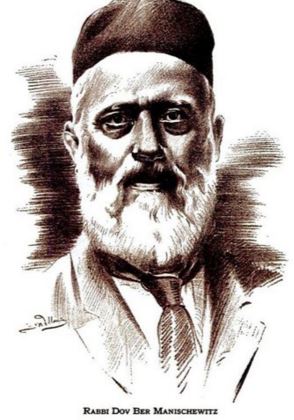
Rabbi Manischewitz (Image Source: Geni.com)

Rabbi Manischewitz
(Credit: Geni.com)

Dov Behr Abramson (1857-1914) was born to a religious Russian-Jewish family in Lithuania. He studied at the famous Telz Yeshiva. After becoming a rabbi he sought to immigrate to the United States. Some say he was only able to do so after buying the passport of a man that had passed away. The man’s name was Manischewitz, and the name stuck. Others say the Rabbi simply made up the name when arriving in America. Either way, he settled with his family in Cincinnati, Ohio. When the holiday of Passover came around, Manischewitz saw that the small Jewish community did not have much kosher matzah, so he began baking them in his basement. His matzahs soon became famous far beyond Cincinnati, and to keep up with demand, Manischewitz opened up a factory where matzahs were made by gas-powered machines. This generated a lot of controversy, as most rabbis at the time believed matzahs had to be hand-made. Nonetheless, machine-made matzahs were soon deemed kosher, and the Manischewitz brand grew ever larger. Manischewitz matzahs were also revolutionary because they were the first to be made in square shapes to simplify manufacturing, packaging, and shipping (traditional matzahs are round). Rabbi Manischewitz passed away in 1914 and left the company to his five sons, who went public in 1923. In the 1940s, the company moved beyond matzahs and expanded into other kosher foods like soups, crackers, and most famously, sweet wines.

Bernard Manischewitz

The Rabbi’s grandson, Bernard Manischewitz (1913-2003), expanded the company even further during his 26 years as president, making it a truly international brand. By 1990, the company had over $1.5 billion in annual sales and was producing everything from gefilte fish to processed meats and borscht. However, there was no willing successor in the family to take over, so Bernard sold it to a private equity firm. He credited Manischewitz with ushering in the age of mass-produced, processed kosher foods, which he called “the biggest change in Jewish domestic life since Biblical times.” Today, Manischewitz is still America’s largest producer of kosher foods, and the world’s largest producer of matzahs.

Words of the Week

Age is an issue of mind over matter. If you don’t mind, it doesn’t matter.
– Mark Twain

Jew of the Week: Jan Koum

WhatsApp

Jan Koum, creator of WhatsApp

Jan Koum, creator of WhatsApp

Jan Koum (b. 1976) was born in Kiev, Ukraine. When he was 16 years old he moved to California with his mother, having experienced enough anti-Semitism and political turnovers. (His father intended to join them eventually, but passed away several years later before he could do so.) The two survived on food stamps and a subsidized two-bedroom apartment. Koum swept floors at a supermarket to make ends meet. At 18, he started learning programming by himself from a set of used books before enrolling at San Jose University. Soon, he got a job working with computers at Ernst & Young, one of the world’s Big Four auditing companies. By 21, Koum had dropped out of school and was hired by Yahoo to work in its infrastructure engineering. After nine years with the company, Koum quit to do some travelling with fellow employee Brian Acton. Upon returning from their trip, the two applied to work for Facebook, but were turned down. Instead, Koum started thinking about a new iPhone messaging app, inspired by how difficult and expensive it was for him to keep in touch with family in Russia and Ukraine (as well as memories of how his parents avoided using a phone in the Soviet Union for fear of being listened to). The following month, he incorporated WhatsApp Inc. Brian Acton later worked together with Koum to make his vision a reality, together with friend Alex Fishman. WhatsApp became hugely popular very quickly, and became the world’s most popular messaging app. In 2014, Koum’s friend Mark Zuckerberg bought out WhatsApp for $19 billion. This thrust Koum onto Forbes list of the world’s richest people. With his net worth now close to $9 billion, he is among the Top 10 richest US immigrants. Meanwhile, WhatsApp expanded to offer voice calls and document-sharing, became completely free (with no advertising), and now has over 1 billion users worldwide. Yesterday, they launched a new form of encryption, making WhatsApp among the most secure forms of communication available to the public. Koum continues to work on WhatsApp, and on the board of Facebook, and has donated hundreds of millions of dollars to charity. He is also a founding member of San Francisco’s JFE – Jews for Entrepreneurship – an organization that provides opportunities for young Jewish entrepreneurs in the high tech sector.

Words of the Week

From religion comes a man’s purpose; from science, his power to achieve it. Sometimes people ask if religion and science are not opposed to one another. They are: in the sense that the thumb and fingers of my hand are opposed to one another. It is an opposition by means of which anything can be grasped.
Sir William Bragg, Nobel Prize-winning physicist